|
NaNA2026 Keynote 1: |
|
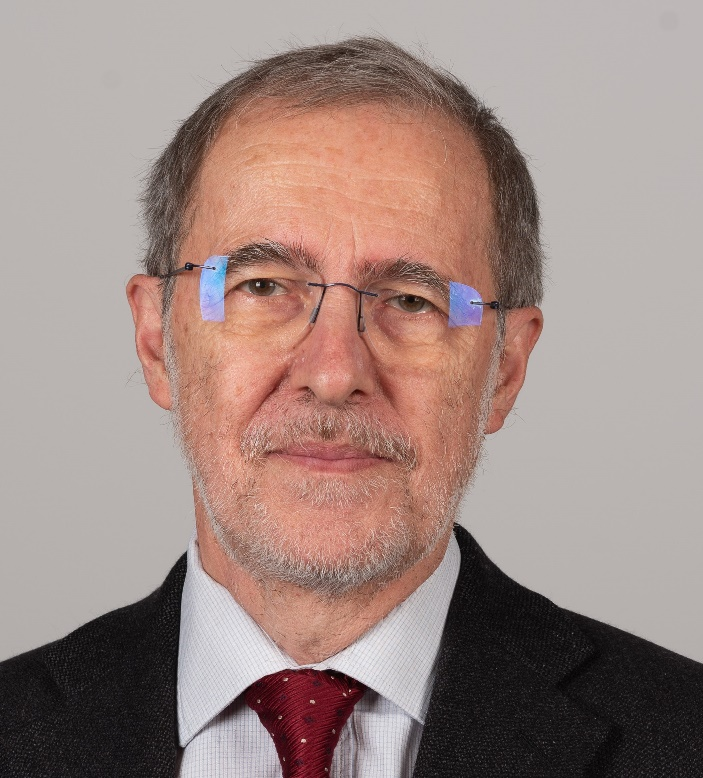
Speaker:
Prof. Achille Pattavina
Title:
Evolution of Data Center Interconnects from Cloudscale Networking to AI Hyperscale Computing
Affiliation:
Politecnico di Milano, Italy
|
| Abstract:Cloud computing has become a reality by the power of distributed data centers (DCs); the bandwidth capacity in these DCs has grown steadily over the past decade driven by new developments in the silicon photonics industry. Progresses achieved in particular in the design and development of optical transmitters and receivers have made it possible a continuous growth of the overall DC interconnect bandwidth, both intra-DC in a single site and inter-DC on a regional scale. The recent exponential growth of interest in all applications of artificial intelligence (AI) has made it clear that an unprecedented request of bandwidth is required not only for interconnecting GPUs/TPUs processors in servers but also for enabling cooperation between servers inside a DC and across different DCs. This is the real challenge to be faced so as to make the widespread usage of more and more powerful LLM AI models a reality. The different solutions developed across the last ten years for the design of optical interconnects in DCs are reviewed showing how the transmission capacity of optical links has scaled up trying to match the growth of DC switching capacity. Emphasis will be given to key design factors, such as modulation formats, pluggable form factors, achievable data rates.
|
Short bio:
Prof. Achille Pattavina received the Dr. Eng. degree in Electronic Engineering from University La Sapienza of Rome (Italy) in 1977. He was with the same University until 1991, when he moved to “Politecnico di Milano”, Milano (Italy), where he has been Full Professor from 1995 to 2024. He has been author/co-author of more than 300 papers in the ICT area published in leading international journals/conferences and of three books: “Switching Theory, Architectures and Performance in Broadband ATM Networks” (John Wiley, 1998), “Communication Networks” (McGraw-Hill, 2nd ed.., 2007, in Italian), “Internet and Computer Networks”, (2nd ed. 2020, and in Italian Pearson, 3rd ed., 2022). He has been Editor for Switching Architecture Performance of the Transactions on Communications (IEEE) from 1994 to 2011, Editor for Optical Switching and Networking (Elsevier) from 2004 to 2015, and also Editor-in-Chief of the European Transactions on Telecommunications (AEIT) from 2001 to 2010. He has been PI of national projects and local coordinator of international research activities, including European Union funded projects. His current research interests are in the areas of cloud computing and data centers, green ICT, switching theory.
|
NaNA2026 Keynote 2: |
|
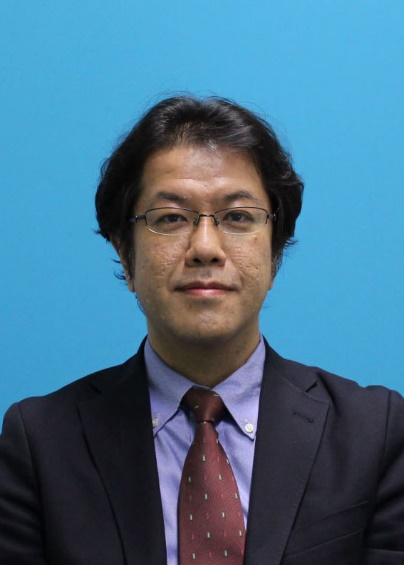
Speaker:
Prof. Hiroshi Inamura
Title:
Availability Challenges in Large-Scale Network Systems
Affiliation:
Future University Hakodate, Japan
|
| Abstract:Recently, a decline in GitHub's service level has been observed due to increased load and an increase in heterogeneous traffic not included in the operational plan. The proliferation of AI agents and the introduction of numerous IoT devices have led to the scaling up of infrastructure, which is creating new availability challenges that exceed traditional design assumptions. In the GitHub case, traffic from autonomous AI far exceeded initial plans, and the tightly coupled structure caused a chain reaction of failures, degrading the service level. It has been reported that a shift to "Availability First" and a redesign of the system through loose coupling are being implemented. As a countermeasure, returning to architecture design and decoupling overloaded elements is being suggested. This presentation will introduce the topic of network overload due to unintended coupling, which I have researched to date. I have examined risks unique to large-scale systems, such as synchronous interference where harmless applications unexpectedly interact. I hope this will be useful for the design of IoT systems that are expected to scale up in the future.
|
Short bio:
Hiroshi Inamura is a professor of School of Systems Information Science,
Future University Hakodate, since 2016. His current research interests include mobile computing, system software for smart devices, IoT network and their security. He was an executive research engineer in NTT docomo, Inc. He received B.E., M.E. and D.E. degree in Keio University, Japan. He is a member of IEICE, ACM and IEEE, a fellow of IPSJ.
|
NaNA2026 Keynote 3: |
|
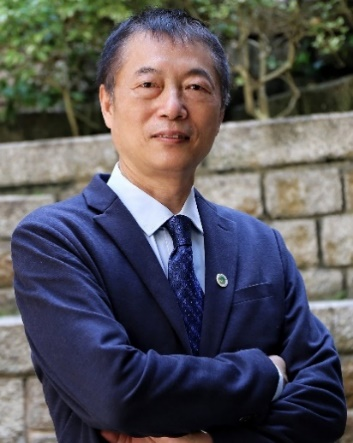
Speaker:
Prof. Wanlei Zhou
Title:
Compatibility between ethics and security for large language models
Affiliation:
City University of Macau, China
|
| Abstract:As a major technological breakthrough in the field of artificial intelligence, large language models have become a core force driving technological industry transformation and innovation today. However, the widespread use of large language models also brings with it a series of information security and ethical risks. On the one hand, attackers can exploit model vulnerabilities to extract sensitive data and manipulate output results, posing systemic security threats. On the other hand, data discrepancies and algorithmic flaws can cause models to intentionally or unintentionally generate biased or offensive content, leading to potential ethical risks. While secure and ethical large language models are a common aspiration in academia and industry, existing large language models face significant challenges in achieving these ethical and safety goals. Our work addresses the above challenges to simultaneously address both safety and ethical risks in real-world applications. In this presentation, I will introduce our recent work in building a large language model training framework based on ethical and safety assessments, designing a dynamic balance solution between ethics and safety, and proposing rigorous proof methods for both ethics and safety.
|
Short bio:
Prof. Wanlei Zhou is currently the Vice Rector (Academic Affairs), City University of Macau, Macao SAR, China. He received the B.Eng and M.Eng degrees from Harbin Institute of Technology, Harbin, China in 1982 and 1984, respectively, and the PhD degree from The Australian National University, Canberra, Australia, in 1991, all in Computer Science and Engineering. He also received a DSc degree (a higher Doctorate degree) from Deakin University in 2002. Before joining City University of Macau, Professor Zhou held various positions including the Head of School of Computer Science in University of Technology Sydney, Australia, the Alfred Deakin Professor, Chair of Information Technology, Associate Dean, and Head of School of Information Technology in Deakin University, Australia. Professor Zhou also served as a lecturer in University of Electronic Science and Technology of China, a system programmer in HP at Massachusetts, USA; a lecturer in Monash University, Melbourne, Australia; and a lecturer in National University of Singapore, Singapore. His main research interests include security, privacy, and distributed computing. Professor Zhou has published more than 500 papers in refereed international journals and refereed international conferences proceedings, including many articles in IEEE transactions and journals. Prof Zhou is an IEEE Life Fellow and is recognised in Stanford's Top 2% Scientists.
|
|
2025-2026
All Rights Rreserved.
|
| |
.jpg)
.png)
.jpg)